

Traffic compliance and enforcement
Vehicle classification, helmet and PPE compliance, number-plate capture and hit-and-run detection for city command centres.
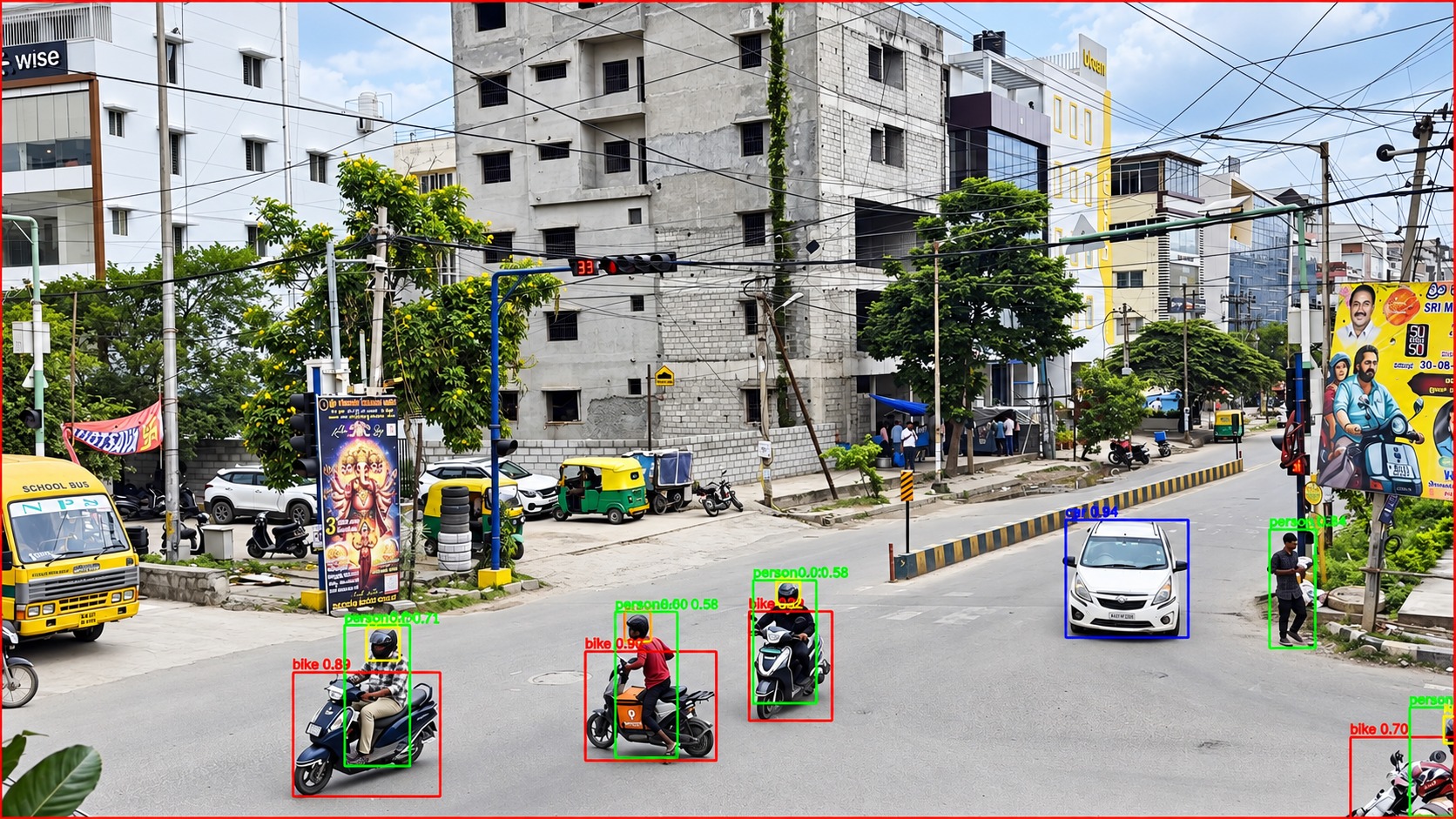
Enforcement at scale is a counting problem before it is a policing problem. Cities need to know what is moving, where it is stopping and where a violation just happened, at all hours and without adding staff to a control room.
VICAS™ classifies vehicles by type, flags helmet and safety violations, reads number plates and detects hit-and-run events, then pushes every incident to a live analytics dashboard that a command centre already knows how to read.
What it detects
Vehicle and auto classification
Cars, autos, bikes and pedestrians are each boxed and labelled with a live confidence score across every lane of an intersection.
No-helmet detection
Riders without a helmet are flagged in real time on two-wheelers, distinct from riders who are compliant.
Multi-lane vehicle detection
Every vehicle across a wide junction is tracked at once, holding classification through mixed traffic and partial occlusion.
Number-plate capture and hit-and-run
Number plates are read and logged automatically, and vehicles involved in a hit-and-run are identified and flagged for follow-up.
From live deployments
Impact on the operation
Stat figures are published industry benchmarks for AI-based visual inspection, not measured results from this specific line.
Helmet, lane and parking violations logged automatically over the reporting period, including 4 hit-and-run events
Share of all occupational fatalities in 2023 that were transportation-related, the risk continuous enforcement targets
Of cities are projected to have deployed smart, AI-based traffic management by 2030, per industry forecasts
Helmet and number-plate detection accuracy demonstrated by published computer-vision traffic enforcement research