
Oil, gas and utilities
Line-of-fire exposure, red-zone control, mud and fluid splash, and load handling on rigs and utility networks.
On a drill floor the hazards are procedural as much as physical. Someone stands in the line of fire, a hand goes on a suspended load, a red zone stays occupied while the string moves.
VICAS™ monitors those behaviours continuously and flags them as they happen. On the utility side the same detection stack handles overhead line clearance and height monitoring.
What it detects
Restricted and red-zone entry
Entry into a hazardous area during an active operation is detected and time-stamped against the operation itself, including work at height on the derrick.
Line of fire
Workers positioned in the path of stored or moving energy are identified before the sequence starts, and the hazard is flagged live on the operator feed.
Hands on load
Unsafe manual contact with a suspended or tensioned load, such as tongs jerking under strain, is detected and recorded as an unsafe act.
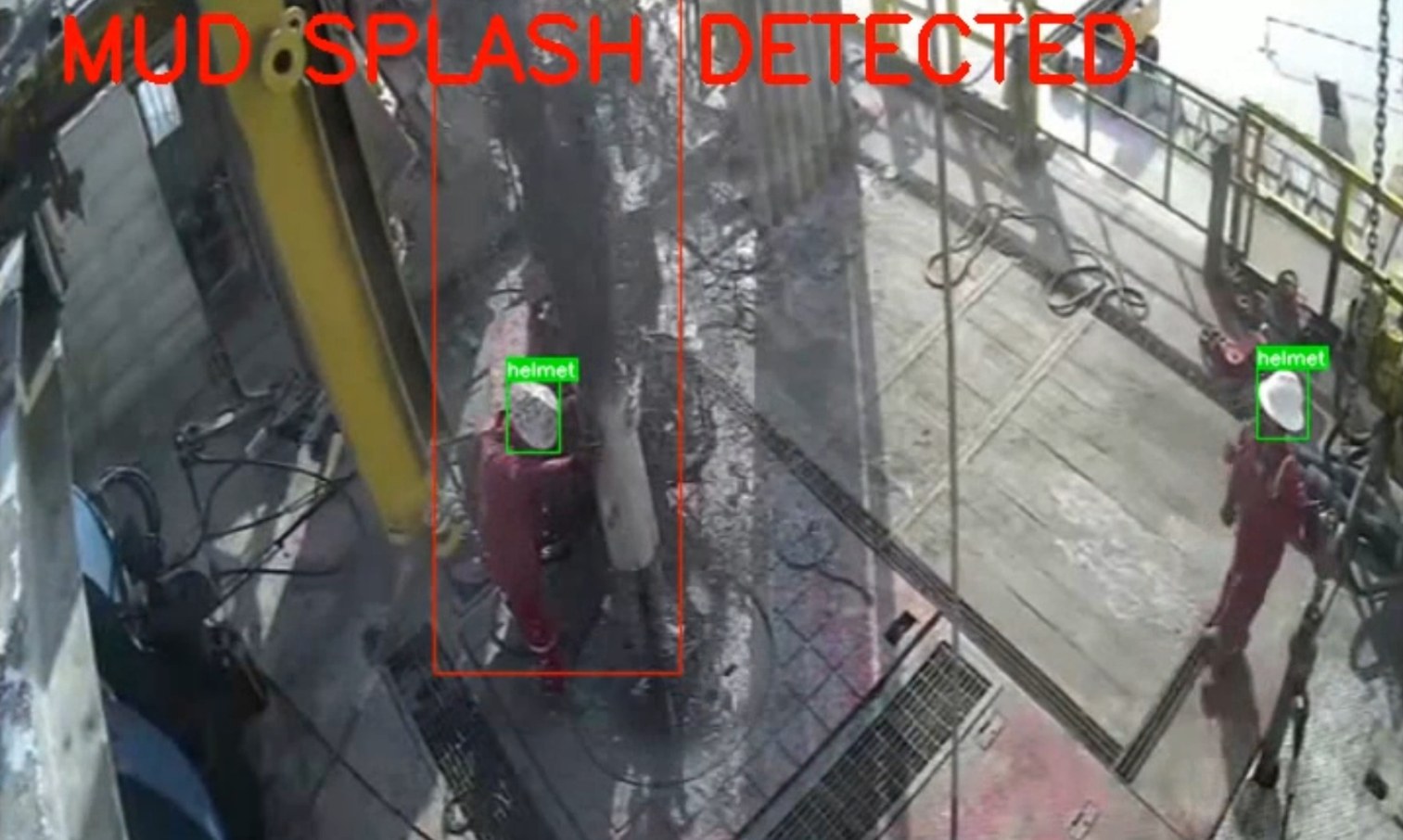
Mud and fluid exposure
Sudden mud or fluid splash during an active operation is detected in real time, so exposed crew can be flagged and moved clear.
From live deployments
Impact on the operation
Stat figures are published industry benchmarks for AI-based visual inspection, not measured results from this specific line.
Fewer critical HSE incidents across monitored line-of-fire, mud splash and load handling operations
Typical reduction in unplanned downtime that facilities achieve within a year of AI-based predictive monitoring
Median time away from work per lost-time workplace injury in 2024, the cost every prevented incident avoids
Share of severe oil and gas extraction injuries caused by contact with objects or equipment