

Construction and road building
Blind-zone protection on excavators, loaders and pavers, plus plant-wide intrusion detection that holds up at night.
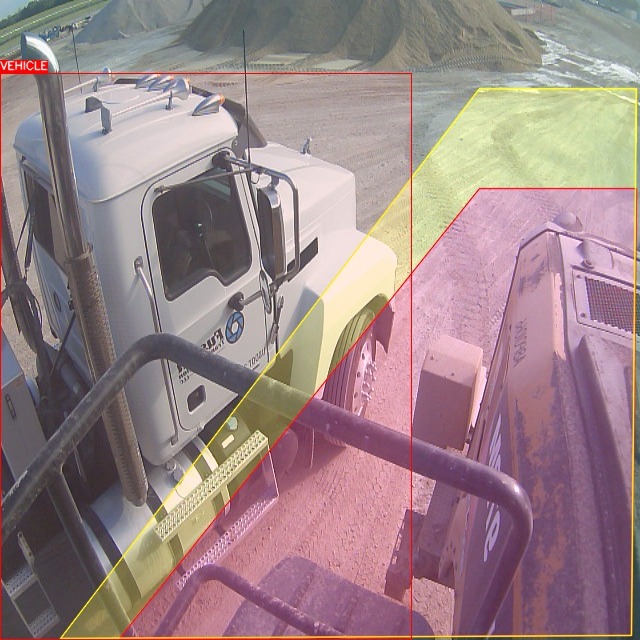
An active road job moves constantly. Machines reverse into space that was clear thirty seconds ago, crews work at night under lighting that defeats most cameras, and the operator's view of the ground behind the machine is a mirror and a hope.
VICAS™ puts detection on the machine itself. Dynamic warning and danger zones travel with the equipment, a worker entering the danger zone is flagged in the cab, and the same models run on fixed cameras covering the plant, the batching area and the entry gates.
What it detects
Worker intrusion in plant areas
Fixed cameras hold a geofenced boundary around silos, conveyors and batching equipment and flag anyone who crosses it.
Low-light and night detection
Detection continues under work lights, headlight glare and full darkness, which is when a large share of road work is done.
Partial human detection
A worker is identified from a limb, a bent posture or a torso behind a spoil pile, rather than only from a clean full-body view.
Proximity to working equipment
Trajectory is computed alongside distance, so a worker walking past a machine does not raise the same alert as a worker walking into its path.
From live deployments
Impact on the operation
Stat figures are published industry benchmarks for AI-based visual inspection, not measured results from this specific line.
Fewer on-site accidents where real-time detection and in-cab alerting replaced observation-only supervision
Typical reduction in workers' compensation claims reported by sites running continuous AI-based safety monitoring
Higher rate of injury and ill-health reported among shift and night workers compared with daytime-only workers
Decline in federally investigated fatal falls following OSHA's National Emphasis Program on fall prevention