

Rail platforms and crowd density
Headcount and crowd density, animal intrusion on the tracks, and dustbin overflow and garbage detection across station platforms and concourses.
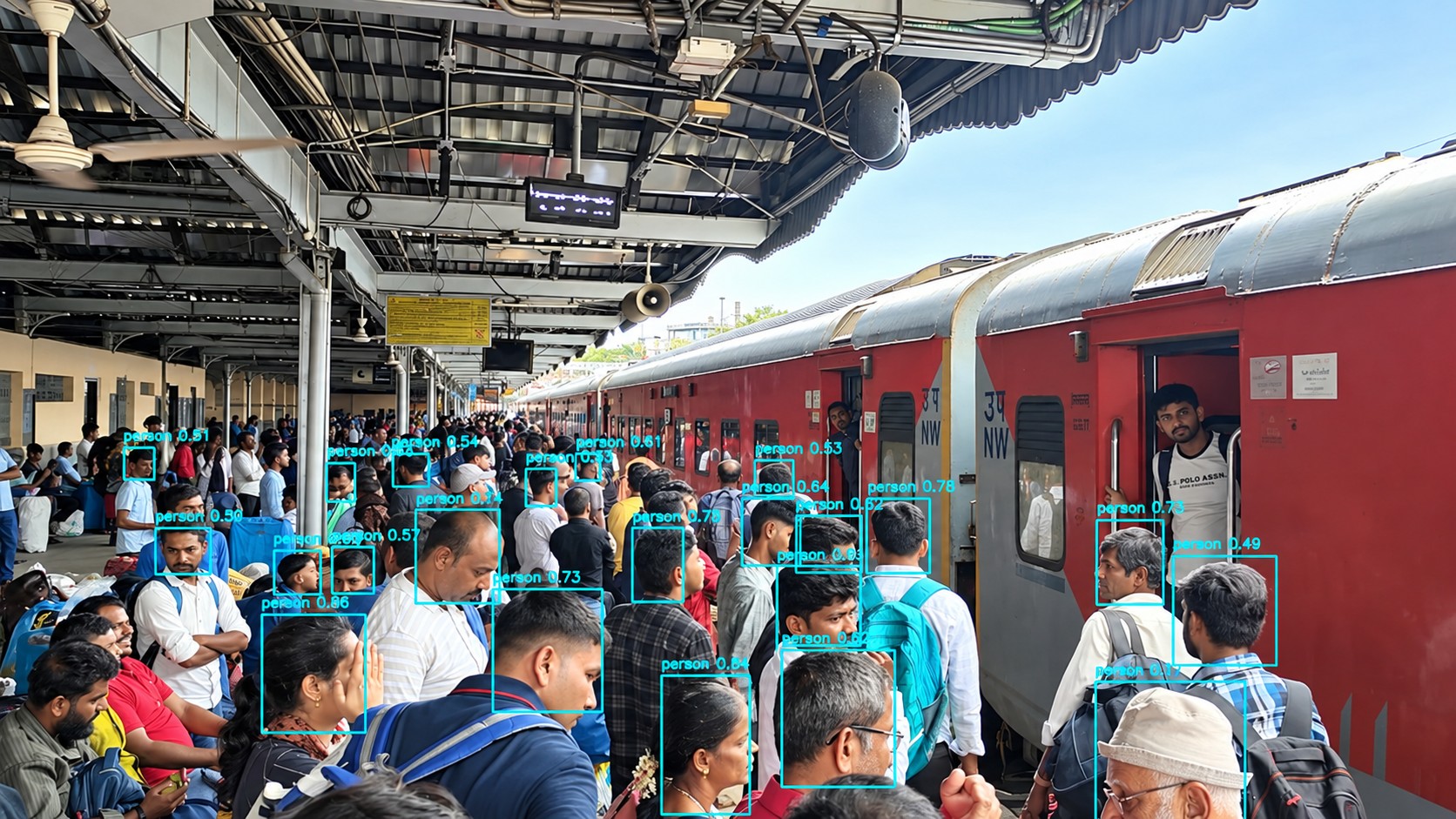
Crowd incidents build slowly and then resolve very quickly. The window in which staff can act is the period when density is rising in one zone and nobody has noticed yet. A station also generates more than just crowd risk, from animals wandering onto the tracks to bins overflowing between collection rounds.
VICAS™ counts people by region of interest and maintains a footfall index per zone, while the same camera feeds flag animal intrusion on the track bed and garbage or dustbin overflow, so a control room sees the build rather than the consequence.
What it detects
Crowd headcount detection
Passengers on a platform are individually boxed and counted, giving a live headcount rather than a visual estimate.
Animal intrusion on the track bed
Elephants, dogs and stray livestock wandering onto the tracks are detected and flagged before a train reaches that section.
Dustbin overflow detection
Platform bins filling past capacity are flagged automatically, so housekeeping is dispatched before waste spills onto the platform.
Garbage and litter detection
Loose garbage accumulating on the platform or concourse floor is identified as a distinct event from bin overflow.
Impact on the operation
Stat figures are published industry benchmarks for AI-based visual inspection, not measured results from this specific line.
Share of passengers left standing during morning peak hours on the busiest London rail line, before crowding is caught by headcount monitoring
Animals struck by trains over a four-year period, per India's national auditor, the risk track-side intrusion detection targets
Fewer overflow incidents reported by cities running sensor-based bin monitoring instead of fixed-schedule patrols
Share of railway mishaps involving people falling from trains or run over on the tracks